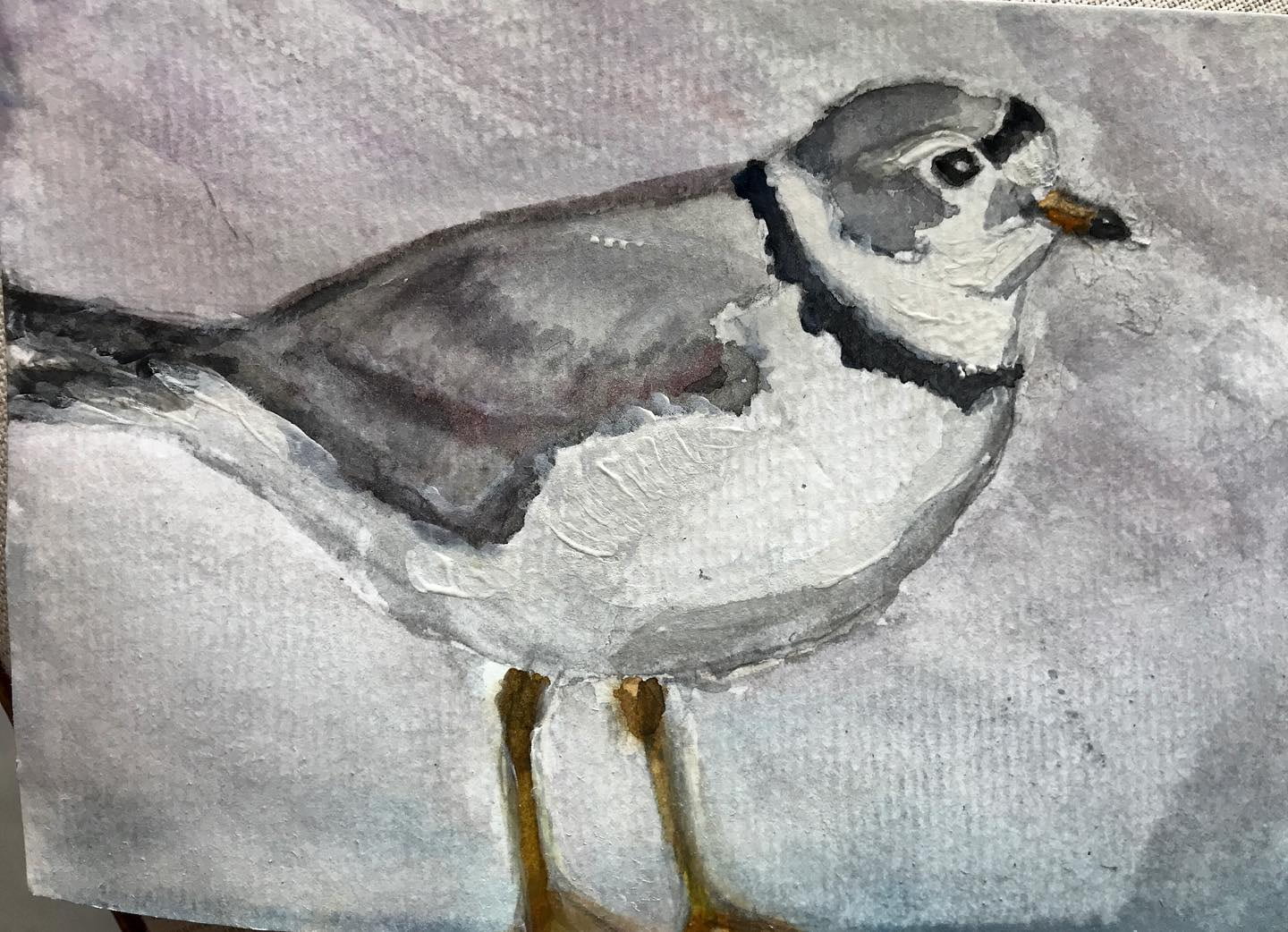
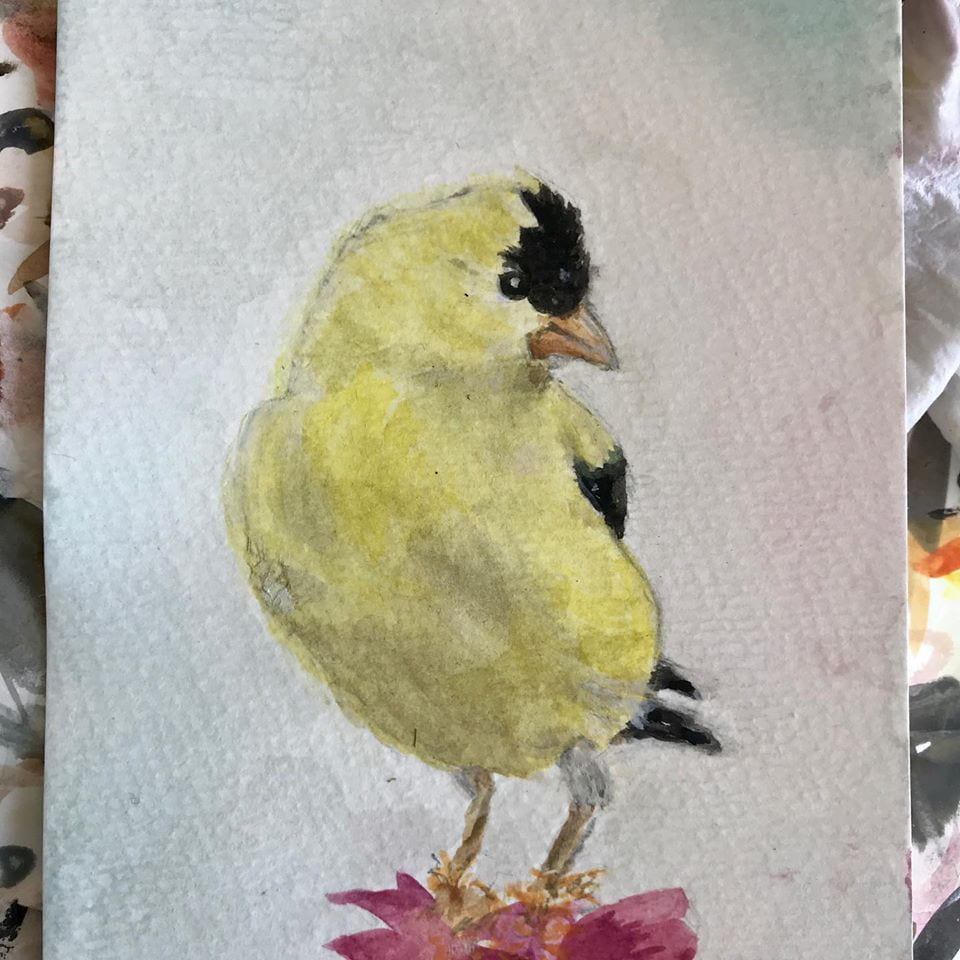
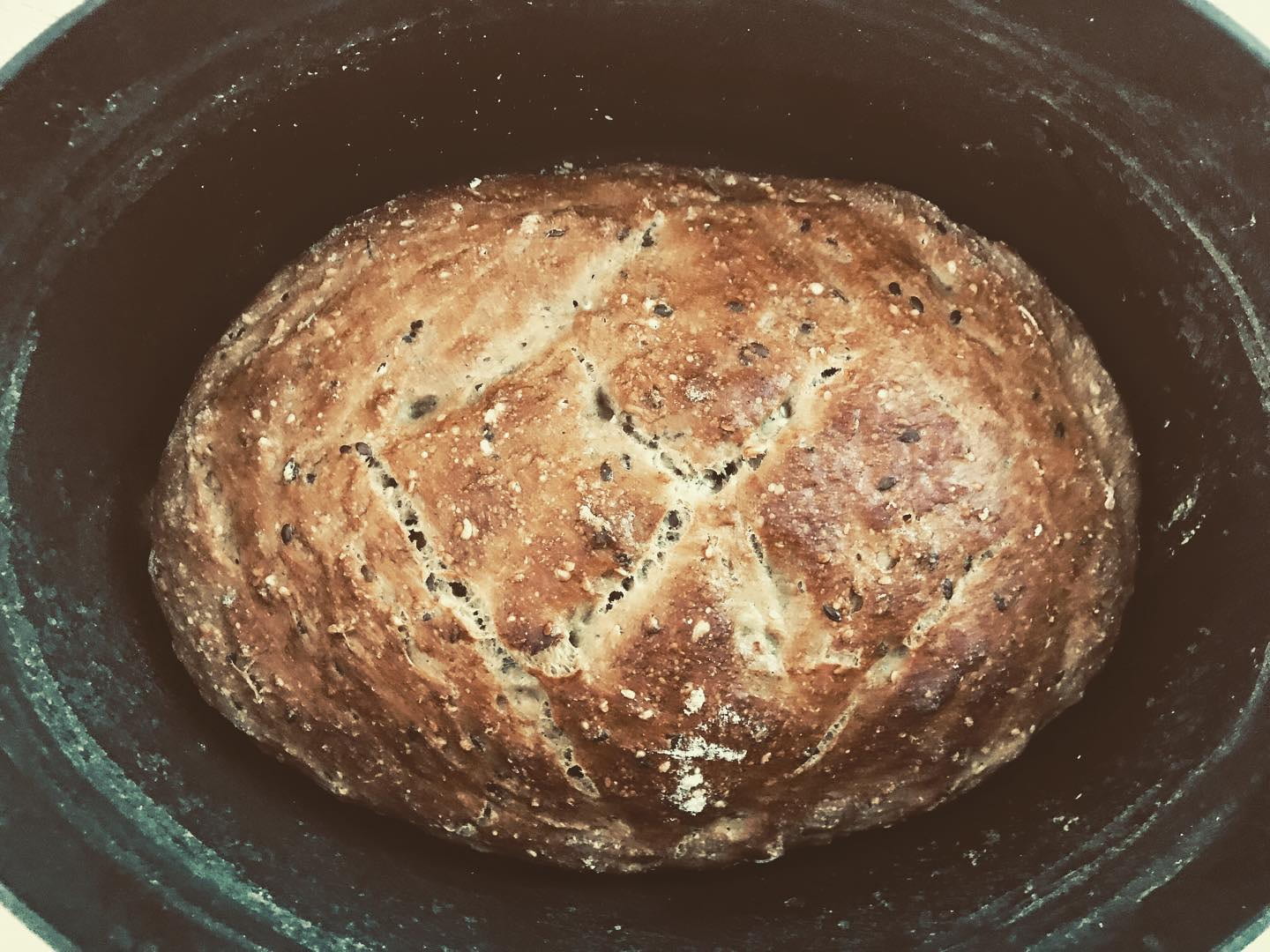
My good news is that at home, I was able to do some painting, music, and baking:
My bad news is that sometimes I felt scared and anxious, so I tried to do some meditation to feel better.
What is your good and bad news?
2. How did you enjoy Flora and Ulysses? What did was your favorite part?
3. Introduction to Mindfulness
So, when I feel nervous or anxious, I try to be MINDFUL
Mindfulness means paying full attention to something. It means slowing down to really notice what you’re doing.
Being mindful is the opposite of rushing or multitasking. When you’re mindful, you’re taking your time. You’re focusing in a relaxed, easy way.
Why Do People Need Mindfulness?
Being mindful helps you:
pay attention better
be less distractible
learn more
stay calm under stress
slow down instead of rush
listen better to others
be more patient
feel happier and enjoy things more
Let’s try a small meditation that helps us to learn how to LISTEN with mindfulness.
In this video, you’ll use your superpower of focus to find a little peace and calm as you mindfully listen to different sounds. Try playing this mindful game when you feel restless or nervous to help soothe and calm your nerves. You can also try playing this mindful game when you already feel calm, strengthening your curiosity and ability to focus and listen.
To play this mindful game, imagine that you are a rabbit hanging out in a beautiful forest. The sun is out, the breeze is blowing, and you can hear all kinds of sounds in the forest. Some sounds are quiet, and some sounds are loud. Some sounds are short, and some sounds are long. As you listen for different sounds, you will be prompted to place your hand on your heart, head, orshoulder when the sound fades away and you can no longer hear it. Some sounds you might hear include a bell, a rainstick, and wooden clap sticks. The trick to this mindful game is to listen closely to how the sounds change and fade away, and only place your hand on your heart, your head, or your shoulder when you can no longer hear the sound. Happy listening
Choose ONE question below and write an essay response.
A) “My yesterdays walk with me. they keep step, they are gray faces that peer over my shoulder.” Discuss the role of the past in two OIB works.
B) Many works of literature feature a moment of revelation. Explore the importance of this moment in two of the works on your OIB syllabus.
C) Explore in what ways and for what purposes two OIB writers have created vivid sense of place or landscape, be it rural or urban.
You must choose one question and write an essay response.
You will begin at 15H and you must send your essay back to me between 17h – 17h30 to my ENT email.
It is preferable that you type your essay in a google document (it is easier to give you comments–make sure to give me the right to modify your document and not just view it). You may also take photos of your handwritten essay.
In the title of your document + the subject of your email, write your name and label it clearly – ex : Charles EARDLEY OIB Comparative Essay May 15.
To prepare mentally, please review the essay rubric below (and, you could have a look at the comments I gave you on your last written comparative essay and the samples of other student writing given to you/uploaded to the blog):
You must compare/contrast two “works” studied so far. Possibilities of “works” are: The Handmaid’s Tale, Love in the Time of Cholera, Frost’s poems, Intimate Apparel, Stranger in the Village, Sweet Bird of Youth (wow, we’ve read quite a lot this year, you should be proud!).
(Please do not write an essay with just The Handmaid’s Tale and Love in the Time of Cholera, as we have already done so. You can use one of these two works if you desire, but choose another for your second work)
Tip: Don’t forget to include “style” (devices, discussion of language) in your analysis for full credit.
Thesis: Make a specific thesis with a defined angle to the vague question. Remember, an anglophone thesis is the “conclusion,” not a question. You then will be like a lawyer who uses evidence to prove your already very specific conclusion.
Organization: There are no real rules but your organization has to be clear, persuasive, and easy to follow. You can write a thesis that includes both works and organize paragraphs that mix the two works together, or, write a two-sentence thesis and transition halfway through your essay to the second work. Comment on elements of style as you go along and highlight how they enhance your argument. Use your paragraphs to organize your points (start each paragraph with a mini-thesis to keep us oriented).
Focus on what the authors are doing, and be careful not to talk too much about the characters like they are real people, but more instruments that the authors use to create effects.
Notes: For now, you may use them, but keep in mind that the real exam will be without notes. To use them efficiently and not waste too much time “looking for answers”, get your notes/books organized before you begin.
I hope you are all doing okay! Yesterday I did not have power at my house for most of the day due to the storm, so it was very difficult to work!
This week I wanted you all to watch the To Kill a Mockingbird Movie, but it is impossible for me to figure out how to get the video to you all. So we will try to watch the video in June.
Here is the work to do this week and next week, we will be wrapping up the book:
Try to spend 45 minutes reviewing the book here to be sure you understood everything!
Please do this by Friday, May 15th.
2) Portfolio projects: This is a bigger project. I emailed you the attachement and you can also find it on Pronote. Since this requires more work it is due in two weeks (remember next week is a shorter week with ascension).
This is an individual assignment, but I am putting you in groups so that you can help each other discuss the book and characters before completing the assignment. You should try to spend 15 minutes talking to the people in your group this week. You are in groups of 3-4 so that if one person cannot talk with you, you still have someone else available. Please email each other to set up a time to chat. Try to connect with your group by Friday, May 15th. Please send me a short email to let me know when you have connected with your group.
Martina, Louise, Théo
Martin, Matthieu, Thaïs
Marc, Philippe, Mya
Camilia, Clémence, Lilou
Gatien, Gauthier, Emilie, Angélique
Esther, Raphaël, Henry
After you have discussed the book and project, you can begin the portfolio presentation, due May 26th.
You should spend a lot of time on this assignment. It will have a coefficient of 2. Please send me any questions on the assignment by Friday, May 15th, so that you have enough time to complete it!
For this project, you will work in groups. Each group must design a presentation (google slides, powerpoint, or prezi) or video to present their topic and comment on how it can be used to manage stress and anxiety. Feel free to be creative and support your presentation with real research. You may also feel free to add personal experiences. You will fill out a confidential survey at the end in order to self-evaluate yoru work and evaluate the work of other group members.
Date due: Wednesday, May 20th
Group 1: Qi Gong
(consider: What is Qi Gong? What is its history? What are its scientific benefits? Describe some simple exercises that we could do daily that might be helpful. Have someone in the group try Qi Gong using a video online and describe its effects)
Tanguy
Lucie
Brune
Louis
Group 2: Exercise and Diet
(consider: How can exercise, cooking, and diet be used to manage stress?)
Jimena
Capucine
Philippine
Oscar
Group 3: Meditation
(consider: What is meditation? What is its history? What different kinds exist? What are its scientific benefits? Describe some simple exercises that we could do daily that might be helpful. Have someone in the group try meditation using a video online and describe its effects. Recommend some meditation resources or videos for beginners. You may even want to write and record your own guided meditatio for the group to try!)
Thel-Mina
Eugenie
Duna
Azi
Group 4: Yoga
(consider: What is Yoga? What is its history? What different kinds exist? What are its scientific benefits? Describe some simple exercises that we could do daily that might be helpful. Have someone in the group try Yoga using a video online and describe its effects. Recommend some yoga resources or videos for beginners)
For this project, you will work in groups. Each group must design a presentation (google slides, powerpoint, or prezi) or video to present their topic. Feel free to be creative and support your presentation with real research. You may also feel free to add personal experiences. You will fill out a confidential survey at the end in order to self-evaluate yoru work and evaluate the work of other group members.
Date due: Wednesday, May 20th
Group 1: What is stress and how can I create a personal plan to manage stress?
(consider: What causes stress? Is stress always bad? How is it manifested in the body? What ways can someone deal with stress–create a sample of a plan to deal with stress or a sample weekly schedule on things to do weekly that can reduce stress)
Alia
Julie
Foulques
Group 2: Write and record a guided meditation. There are many examples and scripts on the internet that you can use. You can either video it or audio record it. One or two people could write, and one record — or you can take turns recording different part of the meditation.
Adam
Laure
Jeanne
Group 3:
Mindfulness. What is mindfulness? What are some easy techniques to use mindfulness? What is the science behind mindfulness? Have one person in your group try a mindfulness activity (breathing, mindful eating, etc) and describe its effects.
Aidan
Paul
Leeloo
Group 4: Design a sample curriculum/presentation for how stress management and mindfulness could be incorporated into St Denis’ culture.
In this new assignment you will learn how rural spaces are changing in LEDCs and MEDCs and be confronted with important new DNL vocabulary (e.g. rural gentrification) and the urban-rural continuum which is a model that attempts to describe how rural space changes (in richer countries) with distance from large cities.
As an introduction, you will first need to study the PowerPoint below and use it to complete the assignment.
Use the PowerPoint to help complete the worksheet below and take the time to study the Grade Descriptions for questions b and c (these show you what is required to achieve maximum points for these questions):
This is, sadly, a still topical case study about people escaping war and poverty in Africa and the Middle East and migrating to Europe.
You will need to watch the two videos (see links below) and read the article from the Guardian (UK newspaper) about the experiences of migrants in order to complete the assignment.
Please begin by watching the short video tutorial I have recorded to introduce and explain this subject:
Migration across the Mediterranean explained:
Migrants telling their stories:
For the final, summary exercise, please copy the link below to access the article on the website of The Guardian newspaper about the photograph:
Attn: This play lasts 3 HOURS! Try to watch it in 2 or 3 pieces.
The acclaimed, sold-out production directed by Simon Godwin, with Ralph Fiennes and Sophie Okonedo as the fated lovers. Streaming from 7pm UK time on Thursday 7 May until 14 May.
As you learned from the last Shakespeare production you watched, the poetic language of Shakespeare can feel overwhelming at the beginning. It would be helpful to know the plot/story a little beforehand. Usually while watching a production, after an adjustment period, the language + visual starts to make some sense.
Consider the following in your review:
• The form and style of the production • The artistic choices which have been made, including sound, lighting, set and costume design choices • Your own critical appreciation of design elements and performance skills • What you think the creative and production team’s intentions were in staging the production • Significant moments in the production where you notice a specific performance skill being used or think a particular directorial decision has been made • Your own response to the overall effectiveness of the piece as an audience member • You could draw a sketch of the set and/or some costumes from the production as you watch
You may also want to watch this 3-minute video about how the costumes were made:
The final HG exam consists of a single 4-hour written paper at the end of Terminale and a 20 minute oral exam. Both exams will test your knowledge and understanding of themes studied in all of History and Geography during Terminale.
The Written Exam (coeff 10)
Each exam paper will contain two menus of exercises: Menu A (History Essay and Geography DBQ) and Menu B (Geography Essay and History DBQ) s.
You must choose either Menu A or Menu B and complete all of it. Both options contain an essay question which you must complete in 2 hours, leaving two hours to complete the DBQ.
The Speaking and Listening Exam (coeff 10)
Firstly, note how it is a speaking and listening exam – you, the candidate, must listen to the questions you are asked. Secondly, the exam is intended to be an exchange rather than an interrogation.
The oral exam falls into two sections: one half about History the other half about Geography.
Candidates will pull out a random piece of paper from an envelope on which will be written EITHER two Geography OR two History questions.
Candidates will then have 20 minutes to prepare for a 7 minute presentation (talk) in response to the question with 3 minutes of follow-up questions on the same subject (History or Geography) by the examiner.
In the last 10 minutes of the exam the examiner will ask the candidate approximately 10 questions about what the student has learnt in the subject not covered by the presentation (this means if the presentation was about a Geography topic then the second part of the exam will be about History, or vice versa).
Questions will come from the entire T°OIB HG course so you need to have affirm grasp of every chapter (even if you were absent and missed classes).
Remember: the exam assesses a student’s speaking and listening skills, and their ability to address the nuances of a question. The oral exam is an exchange between the student and the examiner and the most important part of this exchange is the question and answer session(s).
PLAGIARISM
Plagiarism – what does it mean? It is a word that sometimes confuses students and at the same time makes your teachers groan in despair. But never fear help is here!
Plagiarism fundamentally describes copying the work of another and submitting it as if it is your own work. It is a form of dishonesty and intellectual theft since someone who knowingly copies the work of another student, or knowingly copies something from an internet site and then submits it as if it were something they wrote, has stolen the work of someone else. That is not fair at all.
This video explains what plagiarism is (there are several forms):
This video explains how you can avoid plagiarism:
If you are still not sure about what plagiarism means and how you can avoid it just come and speak to one of us.
CdM
Course Description
In CdM students learn how to critically analyze sources, collaborate and conduct independent research on a subject which engages them and is linked to the key themes of the course (Thinking about Society, Living Together, Building a Common Future).
Each student will gather sources and find an international partner to guide them as they analyze the information they have collected to create their project which has a clear US-focus.
This is evaluated through a 20minute oral exam in which each student explains their finding and conclusions in addition to reflecting on their research journey.
THEME 1: Penser la sociéte (The evolution, structure and functioning of American society)
Pathways:
○ The social contract as the basis of political power
○ The federal system
○ Questions of religion and of faith
○ Equality and protection of the individual
○ The role and challenges of education
○ Evolving definitions of liberty and democracy
○ Public opinion and the media
○ The influence and power of Art and literature in society
○ The place of the USA in international organizations
○ How the USA is seen abroad
○ Questions of gender, sexuality, and identity
○ Gender and racial equality.
THEME 2: Habiter le monde (Integration and migration in the United States)
Pathways:
○ The use of rural and urban space in the USA
○ Sustainable development
○ Migration and movement
○ Cultural and linguistic diversity
○ Inclusion and exclusion in American society
THEME 3: Construire un avenir commun (Evaluating social progress and analyzing social challenges in the United States)
Pathways:
○ Exploitation and preservation of resources
○ The challenges of sustainable development
○ America’s artistic, intellectual, and technological future
Information about the 20 minute oral exam (taken at the end of T°BFI, coefficient 20)
Outline Structure of 10 minute presentation
Title / thesis
How you chose the project
How your projet links to the course
How you went about researching and finding a US based partner
Your findings and conclusions
10 minutes of follow up questions from the two examiners
The examiners will ask questions to clarify what you have presented and obtain more detail from you about your research journey including findings and research choices.
They may well want to know more about your motivations in terms of choosing your title, how you found your partner, your work methods and how you selected sources including reflection on the intercultural or cross-cultural elements of your project.
The purpose of these questions is to enable the examiners to evaluate your work and level of implication and to make sure the assessment criteria explained on the evaluation grid below has been sufficiently covered in order to award an appropriate grade.
You are permitted and encouraged to produce a visual support for your oral exam. This could be in the form of a single PowerPoint slide. The purpose of this support is to reinforce your talk and enable both you and the examiners to see the key points of your projet.
Log Book
Each student must keep a log book in which they record their research journey so that nothing important is forgotten from the 12-15 months invested in preparing for the oral exam.