Freedom to and Freedom From


“There is more than one kind of freedom, said Aunt Lydia. Freedom to and freedom from. In the days of anarchy, it was freedom to. Now you are being given freedom from. Don’t underrate it.”


Offred thinks of Aunt Lydia’s words as she walks down a street and recalls the precautions women had to take to stay safe before Gilead. Aunt Lydia describes the time when women were free to do as they chose as “the days of anarchy,” suggesting that free people cause chaos. Aunt Lydia also wants the Handmaids to think of protection as more valuable than freedom, showing how little she herself thinks of other women’s intelligence.

Give Nature a Voice


Imagine you are the voice of nature, talking to adult Jim and asking him to remember how you helped him grow and change. Ask him to use his voice as a lawyer to save nature to ask farmers to


Presently we saw a curious thing: There were no clouds, the sun was going down in a limpid, gold-washed sky. Just as the lower edge of the red disk rested on the high fields against the horizon, a great black figure suddenly appeared on the face of the sun. We sprang to our feet, straining our eyes toward it. In a moment we realized what it was. On some upland farm, a plough had been left standing in the field. The sun was sinking just behind it. Magnified across the distance by the horizontal light, it stood out against the sun, was exactly contained within the circle of the disk; the handles, the tongue, the share–black against the molten red. There it was, heroic in size, a picture writing on the sun.

Even while we whispered about it, our vision disappeared; the ball dropped and dropped until the red tip went beneath the earth. The fields below us were dark, the sky was growing pale, and that forgotten plough had sunk back to its own littleness somewhere on the prairie. (1.15.50-51)


2nd module: Perfect paragraph on close reading

perfect paragraph model written in class

Perfect Paragraph Model 

In My Antonia, Willa Cather uses personification to depict nature as the main character. While one might think that Jim, the narrator, is the main character, he spends most of his time describing the landscapes. For example, when he  observes his environment after moving to Nebraska, he narrates: “The whole country seemed somehow to be running” (Book I, chapter 2). This example shows how much Jim is captivated by the world surrounding him; the personification of the land moving indicates how he focuses on it as if it were a friend or camarade. Similarly, Jim describes the coming of winter: “Winter comes down savagely over a little town on the prairie” (Book II, chapter 6). Like the previous example, nature is personified, but this time it appears as a sort of antagonist. The word “savagely” demonstrates that winter threatens their lives without warning. Nature constantly impacts the emotions and safety of the characters in the novel – it is something they cannot ignore and is therefore the center of their lives.  In contrast, Jim also illustrates passing moments of nature’s docility: “Little streams of dark water gurgling cheerfully into the streets out of old snowbanks” (Book III, chapter 2). The streams are described as “cheerful”, pushing through the snow of winter and bringing joy to Jim’s life. Nature is constantly changing and evolving just like a main character would in their own story. In conclusion, throughout all the books nature is omnipresent, even more so than the characters themselves.


“Last night, I woke up…”

“…I heard a small breeze of wind.”

“The breeze turned into a gust.”

“The gust turned into a hurricane.”

“Finally, the wind calmed down.” (reverse the exercise)

“Afterwards, I heard the rain. Just a small drop.”

“It’s raining harder and harder!”

“There’s a storm outside!”

“Fortunately, it calmed down.” (reverse the exercise)

“There was no more sound, so I fell back asleep.” (say it in an increasingly calm and soft voice)

tone : past vs present in HT

PRESENT ( detached)
“Thinking can hurt your chances and I intend to last.” pg 14 factual sentence, straight to the point – advice for herself, and for the reader; survival mode 
“Something could be exchanged (…) some deal made, (…) we still had our bodies.” pg 13 shows what they have left is their body, so desperate and detached from reality ready to use it; although she knows it won’t happen

she no longer has the freedom speech or language to gain power – reduced to a body

“We learned to lipread, heads flat on the beds” pg 10 suggests she is in survival mode
“The door of the room –not my room, I refuse to say my” pg 20  importance of possessive pronoun, what little she has to survive; she refuses to participate in her reality; rebels with a small change in language; she doesn’t want to get comfortable because it means accepting reality
“I picked them up, pulled them into my hands finger by finger” (gloves)  actions are monotonous, small, not much to describe, feeling of boredom and time moving slowly; doing things mechanically
“Now I long for it. At least it was talk. An exchange, of sorts.”  shows that talking/speech is controlled, gossip no longer exists (could be punished / fear)
PAST (nostalgic, vivid)
“There was old sex in the room and loneliness” sense of melancholy about freedom of the past 
“I remember those endless white plastic shopping bags from the supermarket (…) Luke used to complain about it periodically he would take all the bags and throw them out.” nostalgia, allusion to pollution, opens up for the first time about her past life with her husband, about a daily occurrence that was a “boring” sort of freedom

She wanted to keep her daughter safe 

“I remember that warning for something that was always about to happen” pg 9 she warns the readers and herself about being too passive about an uncertain future
“I looked at the cigarettes with longing”  it was a part of her real/past identity, when she had agency, she is “longing” shows that the new gov’t taking away any pleasure in life – want women to be objects 


Sensory imagery

Sensory Imagery

https://www.youtube.com/watch?v=1uwl_VnzUVA

Writers use imagery to provide the reader with a context in which to visualize the events of the story. They use words that appeal to a form of sensation to convey a realistic environment, convey a deeper meaning, or evoke a particular feeling. There are six types of imagery.


Warm-up:

Describe an experience observing, befriending, or helping an animal (or insect, or something in nature that you were fascinated with)– either as a child or more recently. Describe how observing or befriending this animal or how this moment made you feel about life (scared, comforted, connected, hopeful?).

Use sensory imagery, simile, metaphor, and personification when you can.


We found Russian Peter digging his potatoes.  We were glad to go in and get warm by his kitchen stove and to see his squashes and Christmas melons, heaped in the storeroom for winter. As we rode away with the spade, Antonia suggested that we stop at the prairie-dog-town and dig into one of the holes. We could find out whether they ran straight down, or were horizontal, like mole-holes; whether they had underground connections; whether the owls had nests down there, lined with feathers. We might get some puppies, or owl eggs, or snakeskins. 3
The dog-town was spread out over perhaps ten acres. The grass had been nibbled short and even, so this stretch was not shaggy and red like the surrounding country, but grey and velvety.  The holes were several yards apart, and were disposed with a good deal of regularity, almost as if the town had been laid out in streets and avenues. One always felt that an orderly and very sociable kind of life was going on there.  I picketed Dude down in a draw, and we went wandering about, looking for a hole that would be easy to dig. The dogs were out, as usual, dozens of them, sitting up on their hind legs over the doors of their houses.  As we approached, they barked, shook their tails at us, and scurried underground. Before the mouths of the holes were little patches of sand and gravel, scratched up, we supposed, from a long way below the surface. Here and there, in the town, we came on larger gravel patches, several yards away from any hole.  If the dogs had scratched the sand up in excavating, how had they carried it so far? It was on one of these gravel beds that I met my adventure. 4
We were examining a big hole with two entrances.  The burrow sloped into the ground at a gentle angle, so that we could see where the two corridors united, and the floor was dusty from use, like a little highway over which much travel went. I was walking backward, in a crouching position, when I heard Antonia scream.  She was standing opposite me, pointing behind me and shouting something in Bohemian.  I whirled round, and there, on one of those dry gravel beds, was the biggest snake I had ever seen.  He was sunning himself, after the cold night, and he must have been asleep when Antonia screamed. When I turned, he was lying in long loose waves, like a letter `W.’ He twitched and began to coil slowly.  He was not merely a big snake, I thought–he was a circus monstrosity. His abominable muscularity, his loathsome, fluid motion, somehow made me sick.  He was as thick as my leg, and looked as if millstones couldn’t crush the disgusting vitality out of him.  He lifted his hideous little head, and rattled. I didn’t run because I didn’t think of it–if my back had been against a stone wall I couldn’t have felt more cornered. I saw his coils tighten–now he would spring, spring his length, I remembered.  I ran up and drove at his head with my spade, struck him fairly across the neck, and in a minute he was all about my feet in wavy loops.  I struck now from hate. Antonia, barefooted as she was, ran up behind me. Even after I had pounded his ugly head flat, his body kept on coiling and winding, doubling and falling back on itself. I walked away and turned my back.  I felt seasick. 5
Antonia came after me, crying, `O Jimmy, he not bite you?  You sure? Why you not run when I say?’ 6
`What did you jabber Bohunk for?  You might have told me there was a snake behind me!’  I said petulantly. 7
`I know I am just awful, Jim, I was so scared.’  She took my handkerchief from my pocket and tried to wipe my face with it, but I snatched it away from her. I suppose I looked as sick as I felt. 8
`I never know you was so brave, Jim,’ she went on comfortingly.  `You is just like big mans; you wait for him lift his head and then you go for him. Ain’t you feel scared a bit?  Now we take that snake home and show everybody. Nobody ain’t seen in this kawntree so big snake like you kill.’ 9
She went on in this strain until I began to think that I had longed for this opportunity, and had hailed it with joy. Cautiously we went back to the snake; he was still groping with his tail, turning up his ugly belly in the light. A faint, fetid smell came from him, and a thread of green liquid oozed from his crushed head. 10
`Look, Tony, that’s his poison,’ I said. 11
I took a long piece of string from my pocket, and she lifted his head with the spade while I tied a noose around it. We pulled him out straight and measured him by my riding-quirt; he was about five and a half feet long.  He had twelve rattles, but they were broken off before they began to taper, so I insisted that he must once have had twenty-four. I explained to Antonia how this meant that he was twenty-four years old, that he must have been there when white men first came, left on from buffalo and Indian times.  As I turned him over, I began to feel proud of him, to have a kind of respect for his age and size.  He seemed like the ancient, eldest Evil. Certainly his kind have left horrible unconscious memories in all warm-blooded life.  When we dragged him down into the draw, Dude sprang off to the end of his tether and shivered all over– wouldn’t let us come near him. 12
We decided that Antonia should ride Dude home, and I would walk. As she rode along slowly, her bare legs swinging against the pony’s sides, she kept shouting back to me about how astonished everybody would be. I followed with the spade over my shoulder, dragging my snake.  Her exultation was contagious.  The great land had never looked to me so big and free. If the red grass were full of rattlers, I was equal to them all. Nevertheless, I stole furtive glances behind me now and then to see that no avenging mate, older and bigger than my quarry, was racing up from the rear. 13
The sun had set when we reached our garden and went down the draw toward the house.  Otto Fuchs was the first one we met. He was sitting on the edge of the cattle-pond, having a quiet pipe before supper.  Antonia called him to come quick and look. He did not say anything for a minute, but scratched his head and turned the snake over with his boot. 14
`Where did you run onto that beauty, Jim?’ 15
`Up at the dog-town,’ I answered laconically. 16
`Kill him yourself?  How come you to have a weepon?’ 17
`We’d been up to Russian Peter’s, to borrow a spade for Ambrosch.’ 18
Otto shook the ashes out of his pipe and squatted down to count the rattles.  `It was just luck you had a tool,’ he said cautiously.  `Gosh! I wouldn’t want to do any business with that fellow myself, unless I had a fence-post along. Your grandmother’s snake-cane wouldn’t more than tickle him. He could stand right up and talk to you, he could. Did he fight hard?’ 19
Antonia broke in:  `He fight something awful!  He is all over Jimmy’s boots. I scream for him to run, but he just hit and hit that snake like he was crazy.’ 20
Otto winked at me.  After Antonia rode on he said: `Got him in the head first crack, didn’t you?  That was just as well.’ 21
We hung him up to the windmill, and when I went down to the kitchen, I found Antonia standing in the middle of the floor, telling the story with a great deal of colour. 22
Subsequent experiences with rattlesnakes taught me that my first encounter was fortunate in circumstance.  My big rattler was old, and had led too easy a life; there was not much fight in him. He had probably lived there for years, with a fat prairie-dog for breakfast whenever he felt like it, a sheltered home, even an owl-feather bed, perhaps, and he had forgot that the world doesn’t owe rattlers a living.  A snake of his size, in fighting trim, would be more than any boy could handle. So in reality it was a mock adventure; the game was fixed for me by chance, as it probably was for many a dragon-slayer. I had been adequately armed by Russian Peter; the snake was old and lazy; and I had Antonia beside me, to appreciate and admire. 23
That snake hung on our corral fence for several days; some of the neighbours came to see it and agreed that it was the biggest rattler ever killed in those parts. This was enough for Antonia.  She liked me better from that time on, and she never took a supercilious air with me again. I had killed a big snake–I was now a big fellow.


Select one of the animals that Jim observes and connects to human behavior and explain how his metaphors reflect the interconnectedness of nature with people.

Paragraph on Atwood’s opening written together in class

How does Atwood create an opening that captivates the reader’s attention?


Atwood captivates the reader’s attention by using in media res, retention and disclosure, and sensory imagery. First of all, the novel begins with the phrase “We slept in what had once been the gymnasium.” This hook leaves the reader with more questions than answers – creating a mysterious beginning where we are plunged in the middle of an uncomfortable setting. This also is a form of retention and disclosure – Atwood withholds the basic information about the setting and situation, creating tension and inciting the reader to continue reading until he can fill in the blanks. Another instance of this same technique occurs when Atwood writes: “we had flannellette sheets like children’s and army issued blankets old ones that still said US.” The words “old” and “still” suggest that the United States no longer exists. Atwood refrains from giving more information, therefore encouraging the reader to imagine what happened to the USA until the true information is disclosed. Moreover, the narrator Offred writes this detail as if it were unimportant–whereas for the reader it is shocking news.


Sensory imagery also involves the reader in the story.  For example, Offred uses flashback to describe the generations of dances in the gymnasium: “dances would have been held there; the music lingered, palimpset of unheard sound(…)”. Here, the sensory imagery transports the readers through the senses, especially through auditory imagery, allowing us to experience the same feelings as Offred. Furthermore, this sensory imagery suggests the memories are very strong in her mind–contrasting with her detached descriptions of her present environment. In addition, the author uses sensory imagery to demonstrate the power of memories. Her descriptions are much more detailed and brilliant than the dismal gym she currently occupies.


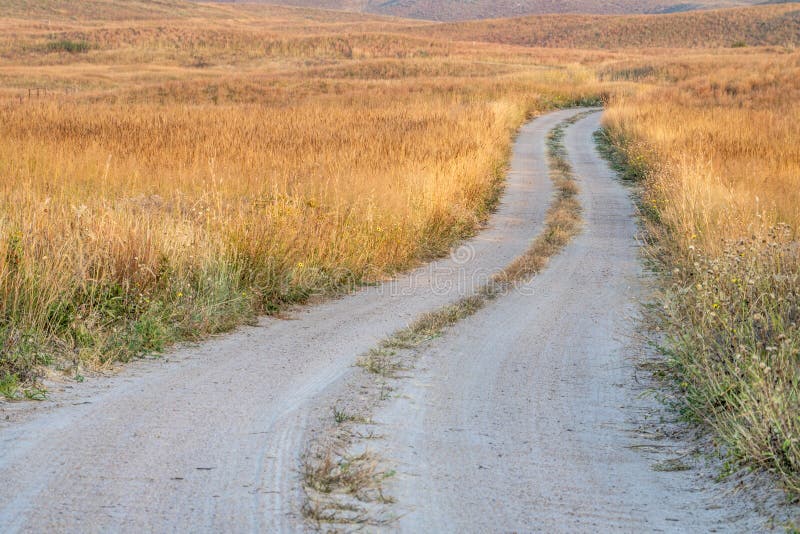
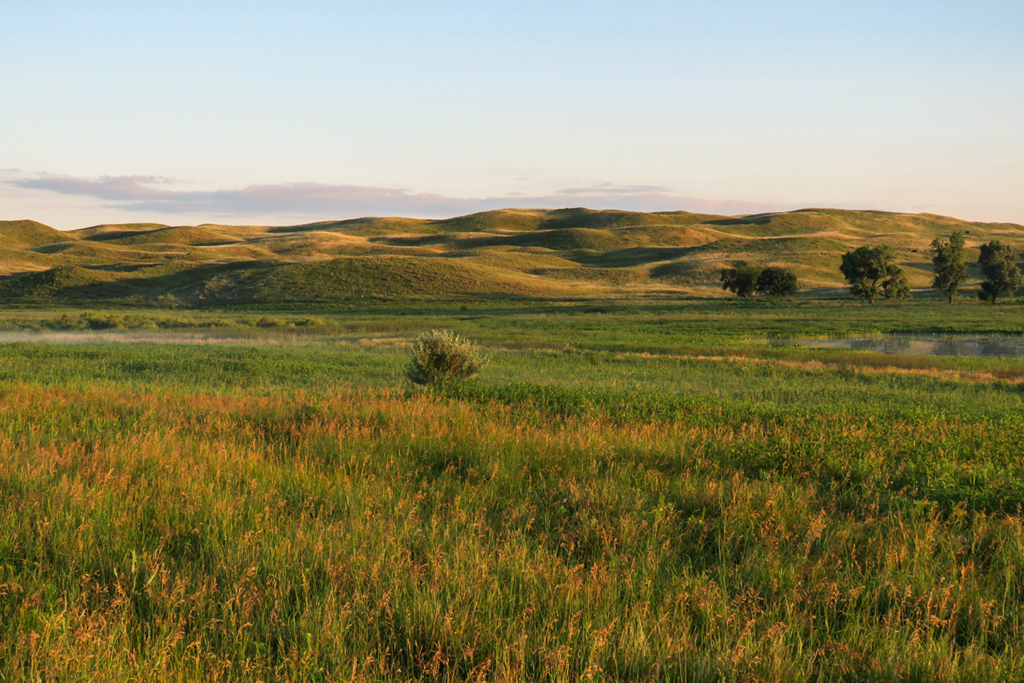
Warm-up nebraskan landscape

Simile

Personifcation

Sensory Imagery

Metaphor

1,040 Nebraska Prairie Stock Photos - Free & Royalty-Free Stock Photos from Dreamstime


Free Sunflower Path Serenity Image | Download at StockCakePrairies | Nebraska Game & Parks Commission


How does your description compare to Willa Cather’s?

“The road ran about like a wild thing, avoiding the deep draws, crossing them where they were wide and shallow. And all along it . . . the sunflowers grew . . . They made a gold ribbon across the prairie.”